Classic Fluffy Buttermilk Scones
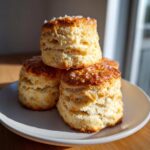
A straightforward recipe for tall, tender buttermilk scones, focusing on cold ingredients and proper mixing to achieve a light, crumbly texture perfect for afternoon tea.
- Prep Time: 15 min
- Cook Time: 15 min
- Total Time: 30 min
- Yield: 8 servings
- Category: Breakfast
- Method: Baking
- Cuisine: British
- Diet: Vegetarian
Ingredients
Scale
- 2 cups all-purpose flour
- 1/4 cup granulated sugar
- 1 tablespoon baking powder
- 1/2 teaspoon salt
- 1/2 cup (1 stick) cold unsalted butter, cut into small cubes
- 3/4 cup cold buttermilk
- 1 large egg, lightly beaten (for egg wash)
- 1 tablespoon coarse sugar (for topping)
Instructions
- Preheat your oven to 425 degrees F (220 degrees C). Line a baking sheet with parchment paper.
- In a large bowl, whisk together the flour, granulated sugar, baking powder, and salt.
- Add the cold butter cubes to the flour mixture. Use a pastry blender or your fingertips to cut the butter into the flour until the mixture resembles coarse crumbs with some pea-sized pieces of butter remaining.
- Make a well in the center of the dry ingredients and pour in the cold buttermilk. Mix quickly with a fork until just combined. Do not overmix; the dough will look shaggy.
- Turn the dough out onto a lightly floured surface. Gently pat the dough into a 3/4-inch thick circle or rectangle.
- Cut the dough into 8 wedges (if making a circle) or use a biscuit cutter to cut out rounds. Place the scones onto the prepared baking sheet, leaving about 1 inch between them.
- Brush the tops of the scones lightly with the beaten egg wash and sprinkle with coarse sugar.
- Bake for 12 to 15 minutes, or until the tops are golden brown and a toothpick inserted into the center comes out clean.
- Transfer the scones to a wire rack to cool slightly before serving warm.
Notes
- Keep all wet and dry ingredients cold. Cold butter creates steam pockets, which results in taller scones.
- Do not overwork the dough. Overmixing develops gluten, leading to tough, dense scones. Mix only until the ingredients come together.
- For extra height, gently press the cut edges of the scones straight down when cutting, rather than twisting the cutter.
Nutrition
- Serving Size: 1 scone
- Calories: 250
- Sugar: 6
- Sodium: 250
- Fat: 13
- Saturated Fat: 8
- Unsaturated Fat: 5
- Trans Fat: 0
- Carbohydrates: 29
- Fiber: 1
- Protein: 5
- Cholesterol: 55
Find it online: https://whiskdaily.com/best-fluffy-buttermilk-scones-recipe/