

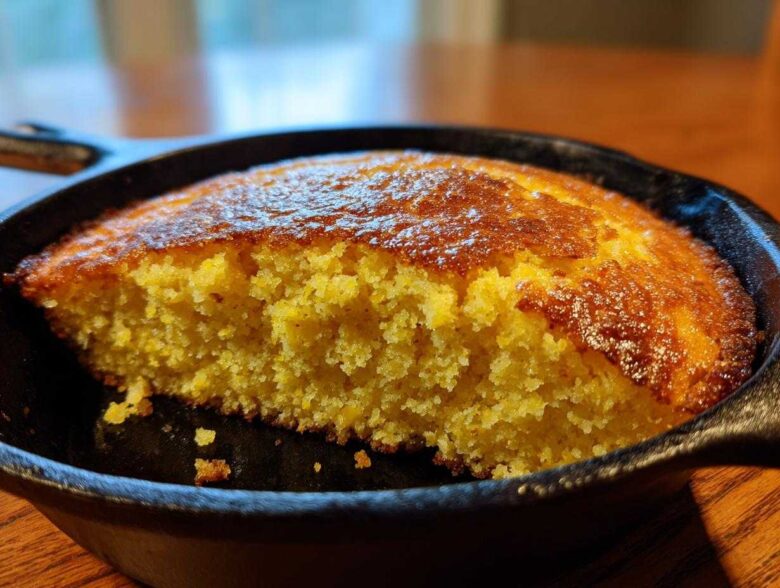
Oh, friends, if you’ve ever chased that dream of cornbread perfection—that sharp, satisfying *crunch* around the edges that melts instantly into a steaming, unbelievably moist center—you’ve come to the absolute right place. I’ve been baking this authentic Southern cast iron skillet cornbread for nearly two decades, and trust me, this isn’t the sweet cake version you run into sometimes; this is the real deal. We’re talking savory, tangy, absolutely zero sugar added. It’s the classic side dish that tastes like Sunday dinner and works perfectly next to a big bowl of chili. Get that cast iron hot, because we are making magic.
Why This Authentic Southern Skillet Cornbread Recipe Works
I know there are a million ways to bake cornbread, but this one never fails to deliver the satisfying texture contrast everyone craves. It’s all about respecting the ingredients and leveraging the power of that heavy cast iron pan. Because we skip the sugar, the focus shifts entirely to that beautiful, slightly tangy flavor profile from the buttermilk and the richness from the fat. It just tastes *right*.
- It’s savory, not sweet—perfect for pairing with chili or greens.
- The proper preheating step guarantees an unbeatable crust.
- We use simple pantry staples; nothing fancy needed, honestly.
Achieving Crispy Skillet Cornbread Edges
This step is non-negotiable if you want that signature crust! You need a 10-inch cast iron skillet, and it has to go into that 425-degree oven for at least 10 minutes before you even think about mixing your batter. That initial blast of heat on the metal, coated in shimmering bacon grease, is what transforms the edge of your skillet cornbread into pure gold.
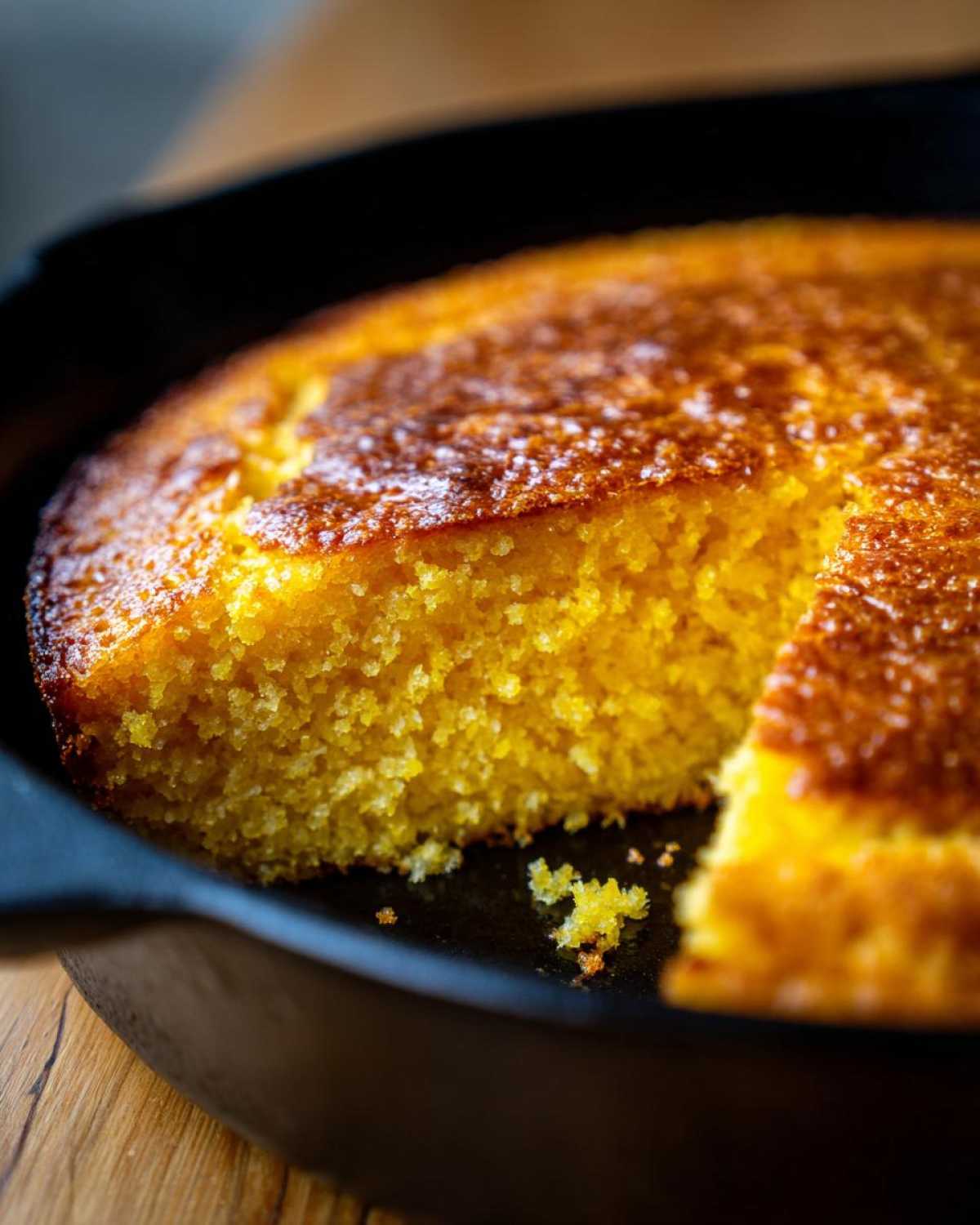
The Secret to Moist Buttermilk Cornbread
The interior texture relies on two things: the buttermilk and our mixing restraint. The buttermilk mixes with the baking soda for a quick, reliable lift. But the key is stirring as little as possible—just until the ingredients are *barely* combined. Overmixing develops flour gluten, and that ends up making your Moist Buttermilk Cornbread tough instead of tender. Lumps are your friends here!
Ingredients for Classic Skillet Cornbread
When you’re making an old-fashioned, savory recipe like this, you really need to stick to the measurements. Luckily, the list is short and sweet! You’ll notice there’s no sugar here, which is what gives it that wonderful Southern profile. Make sure your bacon grease is fully melted before you measure it out—that little bit of liquid fat is crucial for moisture and flavor infusion later on.
Here’s what you’ll need for 8 perfect wedges:
- 1 cup yellow cornmeal
- 1 cup all-purpose flour
- 1 teaspoon baking soda
- 1/2 teaspoon salt
- 1/4 teaspoon black pepper
- 1 cup buttermilk
- 1 large egg
- 1/4 cup bacon grease, melted (you’ll need extra for greasing the pan!)
Because this easy skillet bread recipe moves so fast once the skillet is hot, have all these measured and ready to go before you even turn the oven on. Trust me, nobody wants to measure pepper while that hot skillet is waiting!
How to Prepare Your Skillet Cornbread Perfectly
Okay, this is where the timing gets important, but don’t panic! Once the oven is hot, we move fast. Everything needs to be ready to go so that hot, greasy skillet doesn’t have time to cool down even one degree. We’re aiming for that deep, golden-brown outside that crackles when you cut into it. This is the key step for the best skillet cornbread you’ll ever make.
Just follow these standard steps, and you can’t mess it up. It’s nearly impossible when you use that preheated pan!
- We start by setting the oven nice and high—425 degrees Fahrenheit. Pop that 10-inch cast iron skillet right inside so it gets screaming hot while you mix. This needs a good 10 minutes minimum.
- While the pan heats, whisk your dry ingredients together in a medium bowl: the cornmeal, flour, baking soda, salt, and pepper. Don’t worry about sifting; this is rustic food!
- In a separate smaller bowl, gather your wet ingredients: the buttermilk, the egg, and that measured 1/4 cup of melted bacon grease. Give those a good, quick whisk.
- Pour the wet stuff into the dry stuff. Now, listen to me—mix it only until you stop seeing big streaks of flour. Seriously, stop there. A few lumps are good signs!
- This next part takes guts! Carefully pull that scorching skillet out of the oven. Add another tablespoon or two of bacon grease to the hot pan and swirl it around until the entire bottom and sides look glossy and shimmering.
- Pour your batter straight away into that hot, greased skillet! You should hear a beautiful sizzle, which confirms you did the preheating right.
- Back into the oven it goes. Bake it for about 20 to 25 minutes. You’ll know it’s done when the top looks beautifully golden and a testing toothpick comes out clean.
- Let it rest right in the hot skillet for about five minutes before you slice it up. That short rest period helps it set up perfectly before serving straight from the pan.
Preheating the Cast Iron Skillet
This is literally the most important part of the entire recipe if you want those famous, unbeatable Cast Iron Skillet Cornbread edges. You aren’t just warming the pan; you are essentially flash-frying the bottom layer of your batter the second it hits the metal. Make sure the oven is up to 425°F and that skillet is sitting in there for a full ten minutes. When you pull it out, be extremely careful—use thick mitts! That pan is volcano-hot.
Mixing the Batter for Southern Style Cornbread
The second you combine your wet and dry mixtures, that buttermilk (which is acidic) starts reacting with the baking soda, creating lift. This is why you must be quick! We are aiming for a delicate texture here, and mixing too long develops gluten, which tightens everything up. Don’t try to make the batter uniform; stop stirring the second you don’t see any excess dry pockets anymore. This light hand keeps your Southern Style Cornbread wonderfully tender inside.
Tips for the Best Crispy Skillet Cornbread Edges
Now that you know the technique, let’s talk finesse. Getting those edges perfect takes a tiny bit more attention than just throwing things in a hot pan. If your edges aren’t shatteringly crisp, something in the preheating process or the fat choice needs adjusting. Don’t settle for soft sides when you’ve made this amazing skillet cornbread! These little tricks I picked up over the years are guaranteed to seal the deal on texture.
Make sure you’re using those high heat settings and listen to your pan when you pour the batter—that immediate sizzle is the sound of success. Seriously, don’t let that skillet cool off!
Bacon Grease Cornbread Flavor Boost
Look, I know bacon grease sounds old-school, and maybe it’s a little messy to store, but it truly makes the difference in authentic Bacon Grease Cornbread. It has a high smoke point, so it handles the heat perfectly, and it imparts a subtle, savory smokiness you just can’t replicate with plain oil. If you absolutely can’t render any fat, high-quality unsalted butter is your next best bet—use the same amount, melted, for that hot pan greasing step. But if you want that true Southern Style flavor, save up your drippings!
Variations on Your Skillet Cornbread
Now, I preach authenticity, but sometimes you just need to kick things up a notch, right? This base skillet cornbread recipe is so sturdy and flavorful that it handles fantastic add-ins beautifully without compromising that essential crispy crust or moist interior. We are keeping it savory since that’s the Southern way, but we can certainly introduce some exciting textures and tastes!
Feel free to stir these in during the last moments of mixing the batter—just before you pour it into that sizzling hot pan! You don’t want to work these additions too much, or you lose that tender crumb we worked so hard to achieve.
Savory Additions: Jalapeno Cheddar Cornbread
If you like a little heat with your butter, this is the way to go. For a fantastic Jalapeno Cheddar Cornbread, I recommend mixing in about half a cup of finely diced fresh jalapenos—make sure you seed them unless you like serious fire! Pair that with about a cup of sharp, shredded cheddar cheese.
The trick here is to fold them in gently right after you’ve combined the wet and dry ingredients, which should only take about 15 seconds max. The cheese melts during the bake, giving you pockets of salty goodness, and the jalapenos add just enough spice to complement the tangy buttermilk.
Another quick favorite is adding thinly sliced green onions along with the cheese. It tastes so fresh, especially when served hot alongside beans. Remember, whatever you add, keep the mixing time super short before it hits that hot cast iron!
Serving Suggestions for Rustic Bread Recipe
Honestly, this Rustic Bread Recipe isn’t just a side dish; it’s the star when paired correctly! Since this is a savory, tangy cornbread, you absolutely want things that can soak up the buttery crumbs and the salty crust. My go-to pairing, especially when the weather turns cool, is a big, hearty bowl of chili. It just sings next to that spicy, smoky flavor.
But it’s also amazing with slow-cooked collard or mustard greens—the slight sweetness that develops in the greens balances the acid from the buttermilk perfectly. Don’t forget about simply crumbling it over a bowl of pinto beans. It breaks down beautifully when you stir it in. Serve it hot right out of the skillet, maybe with an extra pat of butter melting right into the middle. It’s simple, comforting food at its best.
Storage and Reheating Your Skillet Cornbread
This skillet cornbread is best eaten the second it comes out of that hot pan, but leftovers are amazing too! You need to store it properly so that crust doesn’t turn sad and soggy on you overnight. Once the cornbread has cooled completely—and I mean completely!—wrap it loosely in plastic wrap or place it in an airtight container at room temperature for up to three days.
Do *not* refrigerate it unless you live somewhere super humid, because fridge coldness zaps homemade bread of its moisture quick! To bring back that glorious crackle, just pop a wedge back into a 350-degree oven for about five minutes until it’s reheated through. That quick blast of dry heat revives the crispy edges beautifully!
Frequently Asked Questions About Homemade Cornbread Recipe
I get so many questions about keeping this homemade cornbread recipe just right, especially on texture! It’s usually about holding onto those crispy edges or making smart substitutions. Folks always ask if they can change the flavor profile, too. I’ve tried to cover the most common ones here so you can have success on your first try!
Can I make this skillet cornbread sweet instead?
You totally can, but just know you’ll be making a different style of cornbread! This recipe is designed to be a savory, tangy, classic No Sugar Cornbread Classic. If you want sweetness, you need to replace the 1/4 teaspoon of black pepper with 2 tablespoons of sugar or honey. If you add that much sugar, you might want to switch from bacon grease to melted butter, too, just to keep the flavor profile harmonious. But honestly, try it savory first—it’s just better with chili!
What if I don’t have buttermilk for this easy skillet bread recipe?
Don’t let a lack of buttermilk stop you! It’s vital because its acidity reacts strongly with the baking soda we use, which gives the bread its lift. If you’re out, just make your own! Take one cup of regular milk—whole milk is best—and stir in one tablespoon of white vinegar or fresh lemon juice. Let that sit on the counter for about five minutes until it looks slightly curdled. That’s your activated buttermilk, and it works perfectly for this easy skillet bread recipe.
Also, people always ask about the cornmeal! I highly recommend sticking to yellow cornmeal for the traditional Southern look and taste. White cornmeal tends to be a little softer inside, and we are trying for contrast here!
Share Your Favorite Way to Eat This Bread
I am so proud of this recipe, and I really, really want to know how it turned out for you! Did you nail that crisp edge? Did you serve it with something unexpected? Don’t be shy—tell me all about it!
Head down to the comments below and leave me a star rating. If you made it, I’d love for you to mention what you paired it with. Was it smothered in butter? Dipped straight into homemade pinto beans? Let me know!
If you loved this classic approach to a savory side, you can check out all my other favorite ways to bake and cook over on the main blog page. Happy baking, and thank you for trying out my family’s favorite savory, rustic bread!
PrintAuthentic Southern Cast Iron Skillet Cornbread
Make a classic, savory Southern cornbread with crispy edges and a moist center using a preheated cast iron skillet and bacon grease.
- Prep Time: 10 min
- Cook Time: 25 min
- Total Time: 35 min
- Yield: 8 servings
- Category: Side Dish
- Method: Baking
- Cuisine: Southern American
- Diet: Vegetarian
Ingredients
- 1 cup yellow cornmeal
- 1 cup all-purpose flour
- 1 teaspoon baking soda
- 1/2 teaspoon salt
- 1/4 teaspoon black pepper
- 1 cup buttermilk
- 1 large egg
- 1/4 cup bacon grease, melted (plus extra for greasing)
Instructions
- Preheat your oven to 425 degrees Fahrenheit. Place a 10-inch cast iron skillet inside the oven while it preheats for at least 10 minutes.
- In a medium bowl, whisk together the cornmeal, flour, baking soda, salt, and pepper.
- In a separate small bowl, whisk together the buttermilk, egg, and 1/4 cup of melted bacon grease.
- Pour the wet ingredients into the dry ingredients. Mix just until combined; do not overmix. A few lumps are fine.
- Carefully remove the hot skillet from the oven. Add 1 to 2 tablespoons of bacon grease to the hot skillet, swirling to coat the bottom and sides completely. The grease should shimmer.
- Pour the batter immediately into the hot, greased skillet.
- Return the skillet to the oven and bake for 20 to 25 minutes, or until the top is golden brown and a toothpick inserted into the center comes out clean.
- Let the cornbread cool in the skillet for 5 minutes before slicing and serving directly from the skillet.
Notes
- For extra crispy edges, ensure your skillet is very hot before adding the batter.
- If you do not have bacon grease, you can substitute unsalted butter or vegetable oil, but bacon grease provides the traditional Southern flavor.
- This recipe uses baking soda activated by the buttermilk for leavening, so mix the batter right before pouring it into the hot pan.
Nutrition
- Serving Size: 1 wedge
- Calories: 220
- Sugar: 1
- Sodium: 350
- Fat: 12
- Saturated Fat: 4
- Unsaturated Fat: 8
- Trans Fat: 0
- Carbohydrates: 24
- Fiber: 1
- Protein: 5
- Cholesterol: 35