


Oh my gosh, if there is one thing that instantly screams ‘comfort’ and ‘celebration’ in my kitchen, it’s the smell of boiling water hitting fresh Traditional Chinese Dumplings! Forget those sad, frozen packets you grab in a pinch—we are going all in here. We’re making the real deal, the kind that makes your mouth water before they even leave the pot. This recipe is everything I’ve learned over years of tweaking and testing to get that perfect savory pork and cabbage filling inside a chewy, tender homemade wrapper. Seriously, making authentic jiaozi from scratch isn’t just cooking; it’s therapy, especially when prepping for Lunar New Year. Trust me, once you learn these time-tested wrapping techniques, you’ll never go back. For more kitchen adventures, check out my latest posts over at the blog! I promise, this is the most reliable Chinese dumplings recipe you’ll ever need!
Why This Traditional Chinese Dumplings Recipe Stands Out
I know there are tons of shortcuts out there, but when it comes to proper pork cabbage dumplings, you really need to follow the traditional path. It just tastes better, honestly! This recipe is really special because it covers all the bases that make dumplings perfect.
- The filling hits that perfect, savory-yet-fresh balance that you rarely find in takeout.
- We make the wrappers completely from scratch, which gives you that amazing chewy texture—it’s worth the extra five minutes, I swear!
- These are freezer friendly dumplings heaven! You can make a massive batch and save them for busy nights.
Authentic Flavor Profile for Your Pork Cabbage Dumplings
The secret sauce—or lack thereof—is actually simplicity here. We use good ground pork, plenty of finely chopped Napa cabbage, a pop of fresh ginger, and honest soy sauce. That core flavor combo is what defines traditional authentic jiaozi. It’s savory, slightly earthy from the cabbage, and you can really taste the quality of the simple ingredients when they’re mixed just right.
Mastering Homemade Dumpling Wrappers
Listen, store-bought skins are fine in a pinch, but they never have the right ‘bite.’ Making your own homemade dumpling wrappers transforms the entire experience! They get wonderfully pliable and the texture after boiling is just superior—so much nicer than the slightly cardboard feel of the pre-made ones. The key is letting the dough rest for those crucial 30 minutes; that’s what makes it super easy to roll thin without tearing later on.
Gathering Ingredients for Authentic Jiaozi
You cannot rush good dumplings, and that starts with having everything prepped and ready to go! When you’re aiming for something this authentic, you have to embrace the process. Get all your components measured out because once the rolling and folding start, things move quickly. I find having everything lined up makes the assembly process so much smoother—plus, it’s less messy! If you like making things from scratch, you might enjoy my tutorial on making wraps for chicken shawarma too.
For the Homemade Dumpling Wrappers
For the actual wrapper dough, you only need three things, but the water temperature really matters! Grab 2 cups of all-purpose flour and slowly mix in about 3/4 cup of warm water. I look for water that feels pleasantly warm—think bathwater temperature, not scalding! If it seems too dry, just add a *tiny* splash more. That’s our foundation for those wonderful homemade dumpling wrappers.
For the Savory Pork Cabbage Dumplings Filling
Now for the gorgeous part: the flavor explosion! You’ll use 1 pound of ground pork. Make sure you finely chop about 3 cups of Napa cabbage—the finer the better for packing. Also, make sure you have 1/4 cup of chopped green onions and 1 teaspoon of freshly grated ginger; that ginger is non-negotiable for a bright taste! Finish that off with 2 tablespoons of soy sauce, 1 tablespoon of sesame oil, 1/2 teaspoon of salt, and just a pinch of white pepper. You have to mix this filling until it’s totally uniform and starts getting a little sticky—that means the proteins are binding, which is key for holding shape!
Step-by-Step Guide to Making Traditional Chinese Dumplings
Alright, buckle up, because this is where the magic happens! Making Traditional Chinese Dumplings is a fantastic process. If you’ve ever wanted to tackle homemade dough, this is your moment. If you’ve already nailed cooking up something like my amazing takeout-style fried rice [check it out here], you know precision pays off. Let’s get these wrappers rolled and these pockets filled for the best boiled Chinese dumplings experience!
Making and Resting the Dough for Homemade Dumpling Wrappers
First thing’s first: the dough! You mix your flour and that warm water until it shags together, and then you get to work kneading it—don’t cheat this step! You need a full 8 to 10 minutes of solid kneading until it feels beautifully smooth under your hands. Once you achieve that perfect, elastic ball, wrap it up tight. It absolutely *has* to rest for 30 minutes. This waiting game develops the gluten perfectly. Trust me, if you skip the rest, the dough will fight you when you try to roll it thin!
Mixing the Perfect Pork Cabbage Dumplings Filling
While that dough is having its little nap, we whip up that incredible filling. Get your pork, cabbage, green onion, ginger, and seasonings into a big bowl. The trick here, the absolute most important thing? You need to mix, mix, mix! You are aiming for a mixture that feels slightly sticky and uniform. When you lift some with your spoon and it holds its shape instead of immediately falling apart, you’ve hit the spot. That stickiness ensures your pork cabbage dumplings stay sealed!
Techniques for Rolling and Pleating Traditional Chinese Dumplings
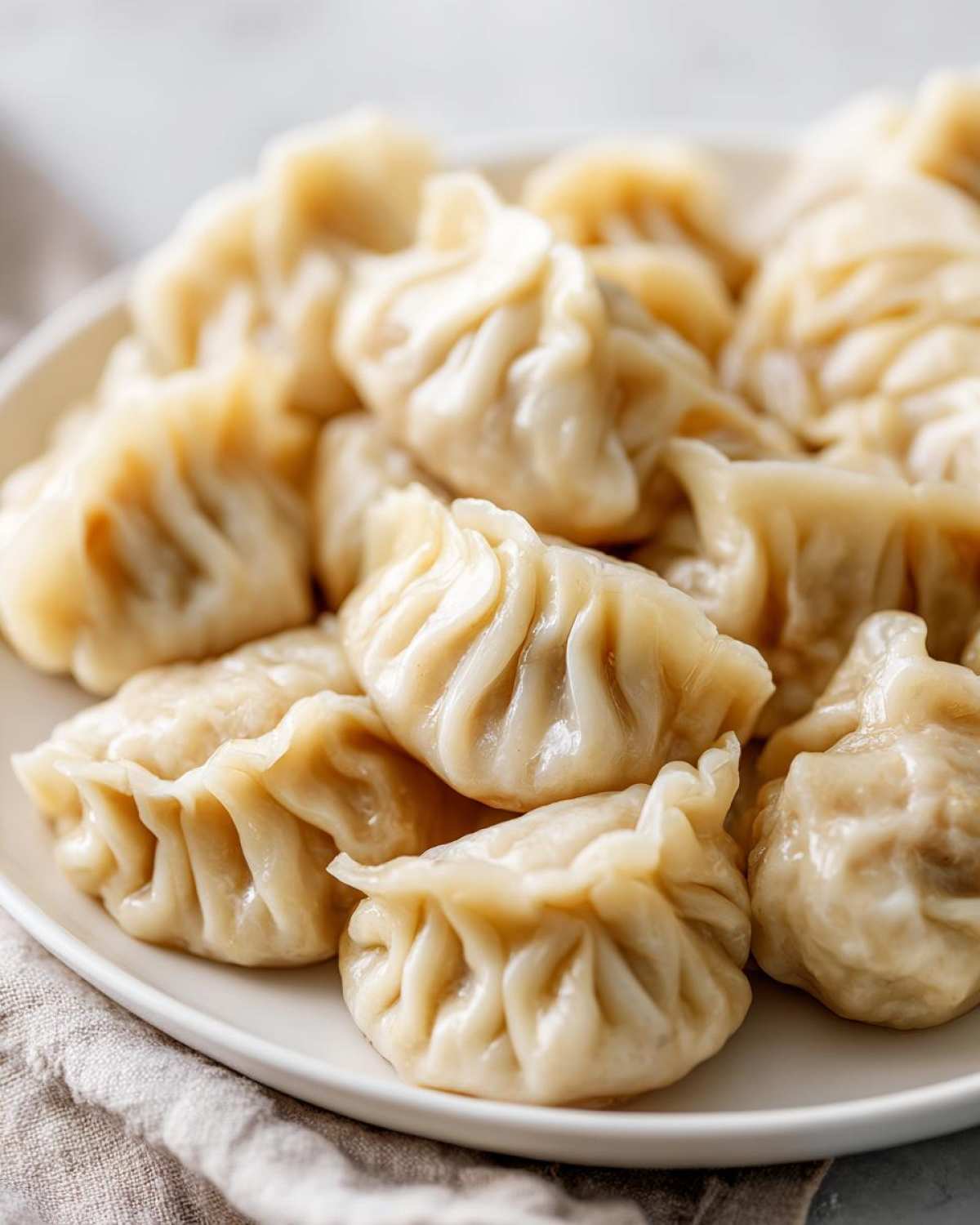
Once the dough is happy, divide it and roll each section into a long rope, then slice into 1-inch bits. This is where you channel your inner expert: roll each small piece into a circle, always keeping the center a little thicker than the edges. The slightly thinner edge makes the gathering process so much easier! Take about a teaspoon of filling, place it in the middle, and then wet those edges with a tiny bit of water—this is your glue! Fold it over into that classic half-moon shape. Now, start crimping those edges with small, tight pleats, pressing firmly as you go. You want them totally sealed so none of that savory juice escapes while cooking.
How to Cook Boiled Chinese Dumplings Perfectly
Time for the water! Get a big pot of water boiling hard—a rolling boil! Gently drop your beautiful dumplings in, but don’t pile them in, or the temperature will drop too much. Stir them very softly right away; this stops them from immediately gluing themselves to the bottom of the pot. Once they all float to the surface—and they will, yay!—that’s your visual cue. Keep them boiling for another 3 to 5 minutes after they float, just to make absolutely sure that center pork filling is cooked through. Use a slotted spoon to get them out gently.
Tips for Success with Your Traditional Chinese Dumplings
Even with the perfect recipe card, sometimes things feel a little sticky or you run out of that fancy Napa cabbage! Don’t panic; these are just tips I’ve picked up over years of trial and error, which I’m happy to pass along. You’ve got this! For more handy general kitchen advice, feel free to browse around my other cooking posts.
Ingredient Notes and Cabbage Substitutions
If the store is out of Napa cabbage, you can absolutely use regular green cabbage, but you MUST blanch it first. Just drop the chopped regular cabbage into boiling water for about 30 seconds, then shock it in ice water, drain it super well, and *then* chop it. This softens it up nicely. Also, when mixing your pork filling, make sure you’re not using pork that’s too lean! A little fat (like 80/20 mix) keeps these Traditional Chinese Dumplings juicy and flavorful after boiling.
Storing and Freezing Your Freezer Friendly Dumplings
Okay, do you know the best part about making a huge batch of authentic jiaozi? You get leftovers! Or, better yet, you get to build up a stash of freezer friendly dumplings for those nights when you want something amazing fast. Honestly, making these from scratch is worth the effort if you can freeze half of them for later—it means less rolling next month!
The freezing process is super simple, but you have to follow these steps or you end up with one giant lump of pork and wrapper! First, you need a baking sheet lined well with parchment paper—this prevents sticking, which is always the enemy. Lay your *uncooked* dumplings out on the sheet single file. Don’t let them touch! Pop that sheet right into the freezer until they are rock solid, which usually takes an hour or two. Once they are frozen solid, you can just snatch them up and toss them into an airtight bag for long-term storage. Make sure you squeeze out as much air as possible before sealing it!
When it’s time to cook those frozen gems, just treat them exactly like fresh ones when boiling, but add a couple of extra minutes. They usually take about 3 to 5 minutes *after* they float, so with frozen ones, plan on adding another 2 or 3 minutes to that boiling time just to be safe everything is cooked through. It’s such a lifesaver, isn’t it? You get all the flavor from the homemade dough without doing all the work again!
Serving Suggestions for Traditional Chinese Dumplings
You’ve done the hard work, you folded them beautifully, and now they are ready! You cannot serve perfect Traditional Chinese Dumplings naked, though—they need the proper dressing up. The classic dipping sauce is super simple, which lets that savory pork filling really shine through. I usually mix up equal parts soy sauce and rice vinegar, and then I add just a little tiny drizzle of sesame oil for fragrance.
If you like a little heat—and who doesn’t?—you take that mixture and drop in a few shakes of chili oil. That little spicy kick cuts through the richness of the pork so beautifully. For a full meal, these are amazing alongside a simple bowl of broth or maybe some quick stir-fried greens, like my garlic lemon asparagus. Enjoy every single bite!
Frequently Asked Questions About Chinese Dumplings Recipe
It’s totally normal to have questions when you start making something like authentic jiaozi from scratch! Don’t worry, I get asked these all the time. I’ve collected the most common ones right here to make sure your first batch of Chinese dumplings recipe is an absolute success! For more about our site and our mission, feel free to check out our page About Us.
Can I pan-fry these pork cabbage dumplings instead of boiling?
Oh yes, you absolutely can! That’s how you get amazing potstickers! You’ll need a little oil in a non-stick pan over medium-high heat to sear the bottoms until they’re golden brown. Then, pour in just a splash of water—maybe half a cup—and immediately cover the pan to let them steam until the filling is done. Finally, take the lid off and let that remaining water evaporate so the bottoms crisp right back up!
How do I ensure my homemade dumpling wrappers stay soft?
This is crucial! While you are busy filling and folding, the rest of your dough is sitting there slowly drying out and turning into little rubber discs—not what we want! You must keep the unused dough covered up the entire time. Get a clean, slightly damp kitchen towel, or even just wrap it tight in plastic wrap. Keep it covered until the second you pick up that piece to roll it. That simple step keeps them pliable for perfect sealing!
What meat can I use instead of pork in this authentic jiaozi recipe?
If pork isn’t your favorite, there are some great swaps for this authentic jiaozi filling. Ground chicken or ground turkey works really well, though you might need to add just a tiny bit more sesame oil since they tend to be leaner than pork. They soak up the ginger and soy sauce flavors beautifully, so you still get a fantastic result!
Nutritional Estimates for Traditional Chinese Dumplings
I know some folks are really focused on macros—totally fair! It’s good to know what you’re digging into, especially when you make a huge batch like this where it’s easy to accidentally eat half the recipe yourself! Remember that these numbers are just an estimate, okay? They are based on the ingredients we used here for the pork cabbage dumplings and calculated for a serving size of about 5 boiled Chinese dumplings.
Here’s the general breakdown:
- Calories: Roughly 280 per five dumplings
- Fat: Around 14g (Don’t sweat the fat; the healthy fats from the sesame oil and pork fat really make the filling tender!)
- Carbohydrates: About 25g
- Protein: A whopping 15g, which keeps you full!
The sodium count is a little higher, around 450mg, but that largely comes from the soy sauce, which is essential for that traditional flavor. If you want to watch that, just use low-sodium soy sauce when you mix your Traditional Chinese Dumplings filling. Enjoy them, because these are worth every single number!
Share Your Lunar New Year Dumplings Experience
Wow, you made it through the whole process! Now that you’ve mastered the dough, perfected the filling, and hopefully pleated about a million beautiful dumplings, I truly want to know how they tasted! Sharing food is what it’s all about, right?
If you loved these Traditional Chinese Dumplings and think they deserve all the praise, please hit that five-star button below—it really helps other new cooks find this amazing Chinese dumplings recipe. And please, don’t be shy about the comments section! Did you try adding chili oil to your sauce? Did you manage to freeze a whole batch for later? Or maybe you have a secret pleating trick I missed? Drop all your questions and glorious results in the comments below. I love seeing your kitchen successes!
If you need to reach out for anything else, maybe a quick question about substitutions or just to say hello, you can head over to my contact page. Happy tumbling, happy folding, and Gong Xi Fa Cai!
PrintTraditional Chinese Pork and Cabbage Dumplings (Jiaozi)
Recipe for making authentic Chinese dumplings with a savory pork and cabbage filling and homemade wrappers, suitable for boiling or freezing.
- Prep Time: 45 min
- Cook Time: 15 min
- Total Time: 60 min
- Yield: About 40 dumplings
- Category: Main Course
- Method: Boiling
- Cuisine: Chinese
- Diet: Low Fat
Ingredients
- 2 cups all-purpose flour
- 3/4 cup warm water (plus extra if needed)
- 1 pound ground pork
- 3 cups finely chopped Napa cabbage
- 1/4 cup chopped green onions
- 2 tablespoons soy sauce
- 1 tablespoon sesame oil
- 1 teaspoon grated fresh ginger
- 1/2 teaspoon salt
- 1/4 teaspoon white pepper
Instructions
- Make the dough: Combine flour and warm water in a bowl. Mix until a shaggy dough forms. Knead on a lightly floured surface for 8-10 minutes until smooth. Cover the dough and let it rest for 30 minutes.
- Prepare the filling: In a large bowl, combine ground pork, chopped cabbage, green onions, soy sauce, sesame oil, ginger, salt, and white pepper. Mix thoroughly until the mixture is uniform and slightly sticky.
- Roll the wrappers: Divide the rested dough into four equal pieces. Roll each piece into a long rope and cut into 1-inch pieces. Roll each piece into a thin circle, about 3 inches in diameter, keeping the edges slightly thinner than the center.
- Assemble the dumplings: Place about 1 teaspoon of filling in the center of a wrapper. Moisten the edges with water. Fold the wrapper in half to form a half-moon shape. Crimp the edges together using small pleats to seal the dumpling completely.
- Cook the dumplings: Bring a large pot of water to a rolling boil. Gently drop the dumplings into the water, making sure not to overcrowd the pot. Stir gently so they do not stick to the bottom.
- Boil until the dumplings float to the surface, then continue to boil for another 3-5 minutes until the filling is cooked through. Remove with a slotted spoon.
Notes
- For freezing, place uncooked dumplings on a parchment-lined baking sheet and freeze until solid. Transfer frozen dumplings to an airtight bag. Cook directly from frozen, adding 2-3 minutes to the boiling time.
- You can substitute Napa cabbage with regular green cabbage, but blanch it first to soften it slightly before chopping.
- Serve immediately with your preferred dipping sauce, such as soy sauce mixed with vinegar and chili oil.
Nutrition
- Serving Size: 5 dumplings
- Calories: 280
- Sugar: 2
- Sodium: 450
- Fat: 14
- Saturated Fat: 5
- Unsaturated Fat: 9
- Trans Fat: 0
- Carbohydrates: 25
- Fiber: 1
- Protein: 15
- Cholesterol: 55